Snickerdoodle Cookies (Soft & Tangy)
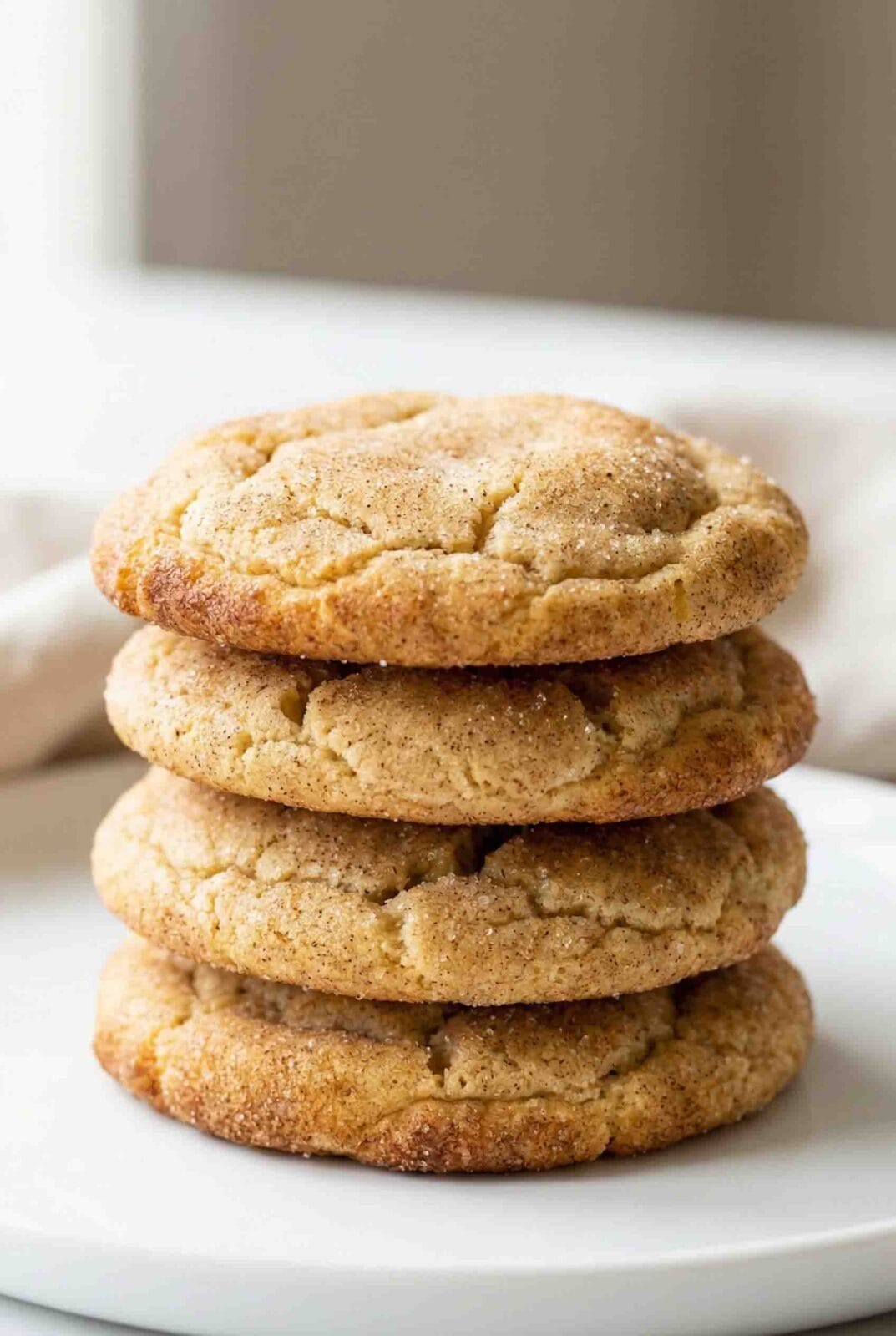
That first bite into a snickerdoodle cookie—the crackled cinnamon-sugar crust giving way to a soft, tangy center—is pure comfort. These cookies skip the chilling step and use cream of tartar for that signature tang. You’ll have warm cookies in under 30 minutes.
Quick Summary
Classic snickerdoodle cookies with crackled cinnamon-sugar tops and soft, chewy centers. The cream of tartar creates the tangy flavor that makes these cookies distinctive. Mix, roll, bake—done in 25 minutes.
Why This Recipe Works
- Cream of tartar creates the signature tangy flavor that separates snickerdoodles from regular cinnamon cookies
- Room temperature butter (not melted) gives you thick, chewy cookies that don’t spread too thin
- Rolling in cinnamon sugar while warm creates that crackled, sparkly coating
- No chilling required means you can bake these on impulse
- Higher sugar ratio keeps centers soft even as edges set
Ingredients Notes & Substitutions
All-Purpose Flour provides structure without making cookies cakey. Bread flour works but creates chewier cookies. Avoid cake flour.
Cream of Tartar is non-negotiable—this is what makes a snickerdoodle. It reacts with baking soda for lift and adds that subtle tang. No substitutes work properly.
Unsalted Butter at room temperature creams properly with sugar. Salted butter works but reduce added salt to 1/4 teaspoon.
Granulated Sugar goes in the dough and the coating. The double sugar application creates texture contrast.
Eggs bind everything and add moisture. Use large eggs at room temperature for proper emulsification.
Vanilla Extract enhances the cinnamon without overpowering it. Pure extract tastes cleaner than imitation.
Ground Cinnamon for the coating should be fresh—stale cinnamon tastes woody rather than warm. Use 1 tablespoon per 1/4 cup sugar for proper coverage.
Baking Soda combined with cream of tartar creates the leavening system. Don’t swap for baking powder.
Salt balances sweetness and enhances flavor depth.
How to Make Snickerdoodle Cookies
Prepare the Dough
Start by beating room temperature butter with granulated sugar until the mixture looks light and fluffy, about 2-3 minutes. This isn’t just mixing—you’re incorporating air that helps cookies rise. Add your egg and vanilla, beating until completely combined with no streaks.
In a separate bowl, whisk together flour, cream of tartar, baking soda, and salt. This distributes the leavening agents evenly so every cookie rises the same. Pour the dry mixture into the wet ingredients and mix until just combined. Overmixing develops gluten and creates tough cookies.
Form and Coat
Prepare your cinnamon-sugar coating by whisking together granulated sugar and cinnamon in a shallow bowl. The ratio matters—too little cinnamon and they taste plain, too much and they’re bitter.
Scoop dough into balls about 1.5 tablespoons each. Roll each ball between your palms until smooth, then drop into the cinnamon sugar. Roll thoroughly to coat every surface—bare spots won’t develop that signature crackle pattern. The coating should look generous and sparkly.
Bake
Place coated dough balls on parchment-lined baking sheets, spacing them 2 inches apart. They’ll spread as they bake. The oven should be preheated to 375°F—this temperature is crucial for the right spread-to-thickness ratio.
Bake for 8-10 minutes. Look for edges that are just set and centers that still look slightly underdone and puffy. The cookies will look too soft, but they’ll firm up as they cool. If you wait until they look done in the oven, they’ll be overbaked and crispy instead of chewy.
Let cookies cool on the baking sheet for 5 minutes before transferring. They’re fragile when hot and will break if moved too soon. After 5 minutes, they’ll have set enough to transfer to a cooling rack.
Pro Tip
For thicker cookies with more dramatic cracks, chill shaped dough balls for 15 minutes before rolling in cinnamon sugar. The cold dough spreads less in the oven, creating a puffier cookie with deeper fissures in the coating.
Expert Tips
- Cool baking sheets between batches—placing dough on hot pans causes immediate spreading and flat cookies. Let sheets cool completely or rotate between two sets.
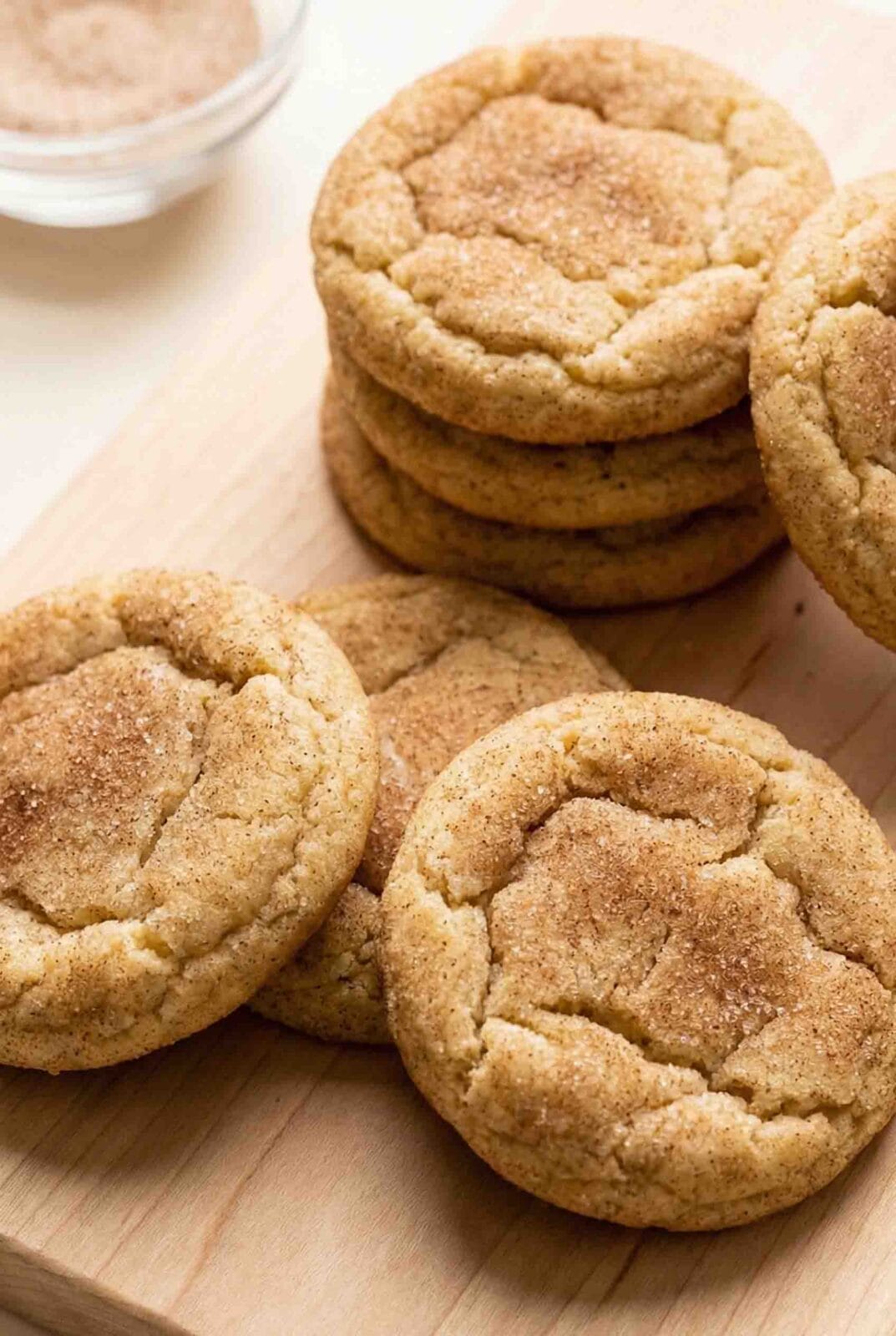
- The crackle test—proper snickerdoodles develop a crackled surface as they bake. Smooth tops mean dough was too warm or oven too cool.
- Spacing matters—cookies need room to spread. Crowding creates uneven baking and merged edges.
- Fresh coating—if cinnamon sugar gets clumpy from repeated dough rolling, refresh it. Clumps create uneven coating.
- Size consistency—use a cookie scoop for uniform balls. Different sizes bake at different rates.
Storage & Freezing
Room Temperature: Store in an airtight container at room temperature for up to 5 days. Place parchment between layers to prevent sticking. Cookies stay soft if container is truly airtight.
Freezing Baked Cookies: Cool completely, then freeze in a single layer on a baking sheet for 1 hour. Transfer to freezer bags, removing excess air. Freeze up to 3 months. Thaw at room temperature for 30 minutes.
Freezing Cookie Dough: Shape dough into balls, coat with cinnamon sugar, and freeze on a baking sheet. Once solid, transfer to freezer bags. Bake from frozen, adding 1-2 minutes to bake time.
FAQ
Why are my snickerdoodles flat and crispy instead of thick and chewy? Your butter was likely too warm or melted. Room temperature butter should hold a finger indentation but not be greasy or soft. Also check your oven temperature with a thermometer—ovens running hot cause excessive spread.
Can I make snickerdoodles without cream of tartar? No substitution creates the same tangy flavor profile. Lemon juice or vinegar don’t work because they add moisture that throws off the dough consistency. Cream of tartar is essential to authentic snickerdoodles.
Do snickerdoodles need to be chilled before baking? No, traditional snickerdoodles don’t require chilling. The dough has the right consistency to scoop and bake immediately.
Why didn’t my cookies develop the crackled top? Under-coating with cinnamon sugar or too-low oven temperature prevents crackling. Make sure each dough ball is thoroughly coated and your oven is fully preheated to 375°F.
How do I keep snickerdoodles soft? Store in an airtight container with a slice of bread to maintain moisture, replacing bread every 2 days.
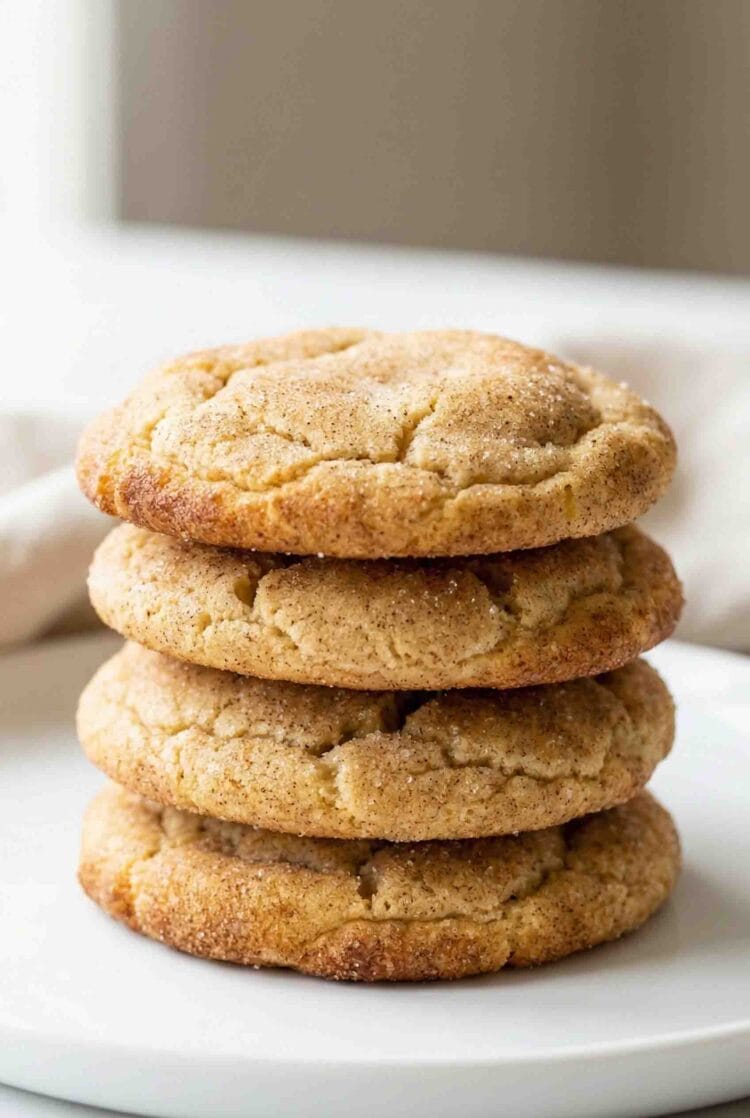
Snickerdoodle Cookies (Soft & Tangy)
Course: DessertCuisine: AmericanDifficulty: Easy24
cookies10
minutes10
minutes110
kcal20
minutesClassic snickerdoodle cookies with crackled cinnamon-sugar coating and soft, tangy centers. No chilling required—ready in 20 minutes.
Ingredients
For the Cookie Dough:
2 3/4 cups All-Purpose Flour – spooned and leveled
2 teaspoons Cream of Tartar
1 teaspoon Baking Soda
1/4 teaspoon Salt
1 cup Unsalted Butter – softened to room temperature
1 1/2 cups Granulated Sugar
2 large Eggs – room temperature
1 teaspoon Vanilla Extract
For the Cinnamon Sugar Coating:
1/4 cup Granulated Sugar
1 tablespoon Ground Cinnamon
Directions
- Preheat oven to 375°F. Line two baking sheets with parchment paper.
- Whisk together flour, cream of tartar, baking soda, and salt in a medium bowl. Set aside.
- Beat butter and 1 1/2 cups sugar in a large bowl with an electric mixer on medium speed until light and fluffy, about 2-3 minutes. The mixture should look pale and creamy.
- Add eggs and vanilla extract, beating until fully incorporated with no streaks remaining.
- Add dry ingredients to wet ingredients, mixing on low speed until just combined. Do not overmix—stop when no flour streaks remain.
- Combine 1/4 cup sugar and cinnamon in a shallow bowl for coating.
- Scoop dough into 1.5-tablespoon portions and roll into smooth balls. Roll each ball thoroughly in cinnamon-sugar mixture, coating completely.
- Place coated dough balls on prepared baking sheets, spacing 2 inches apart. Cookies will spread during baking.
- Bake for 8-10 minutes until edges are set but centers still look slightly underdone and puffy. Cookies should show crackled surfaces. Do not overbake—they firm up as they cool.
- Cool on baking sheet for 5 minutes, then transfer to a wire rack to cool completely.
Notes
- Cookies continue baking on hot pan after removal—underbaking slightly ensures soft centers
- Room temperature ingredients mix more evenly and create better texture
- Store in airtight container at room temperature for up to 5 days
- Freeze baked cookies up to 3 months or freeze coated dough balls to bake later