Perfect Pumpkin Cheesecake: Silky, Creamy Fall Dessert Without Cracks
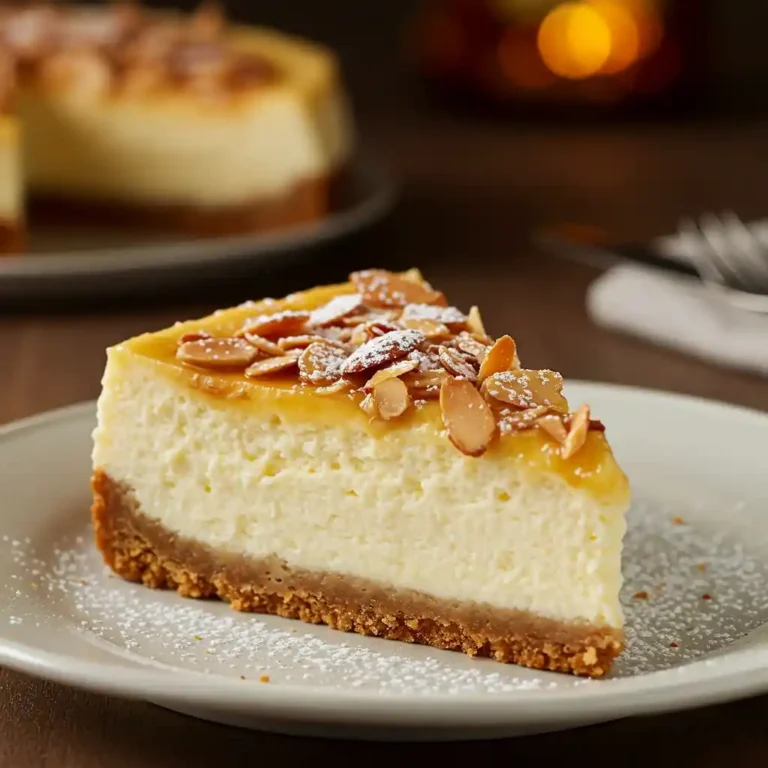
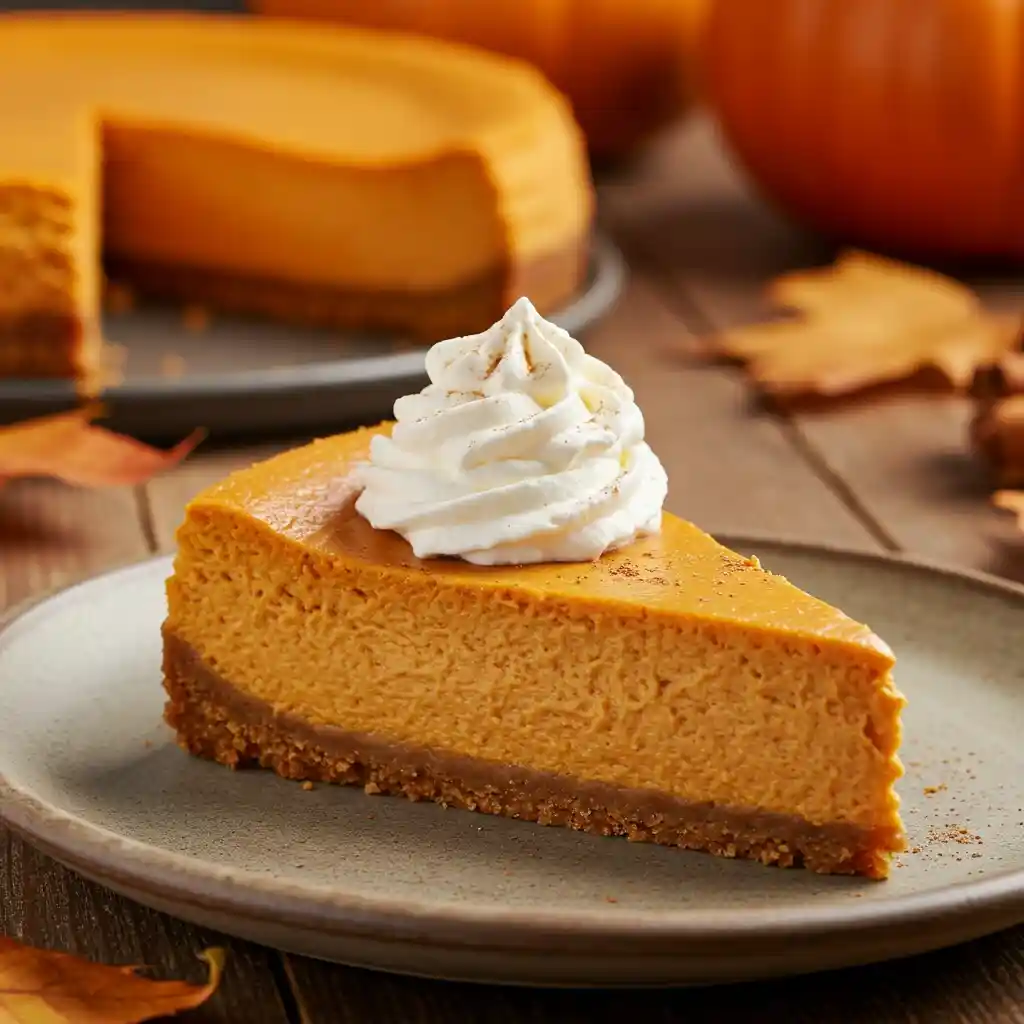
That first bite hits you with a velvety smooth texture that melts across your tongue – rich, tangy cream cheese perfectly balanced with warm spices and earthy pumpkin.
The buttery graham cracker crust shatters with just enough resistance before giving way to the luscious filling. This pumpkin cheesecake took me 12 tests to perfect, focusing on eliminating the three most common problems: cracks, grainy texture, and bland flavor.
By controlling the temperature at every stage and using a specific ratio of pumpkin to cream cheese, I’ve created a foolproof method that delivers consistent results, even for first-time cheesecake bakers.
Why This Recipe Works
- Room temperature ingredients create a perfectly smooth batter without overbeating, which is the primary cause of cracks in cheesecakes.
- Water bath baking maintains gentle, even heat around the cheesecake, preventing the dramatic temperature changes that lead to cracks and uneven baking.
- Cooling gradually in the oven prevents the sudden temperature drop that causes cheesecakes to contract too quickly and split on top.
- Straining the pumpkin puree removes excess moisture, creating a more concentrated flavor and preventing a soggy texture.
Ingredient Notes & Substitutions
Cream cheese forms the foundation of any cheesecake. Use full-fat, brick-style cream cheese (not the spreadable kind in tubs) for proper structure and richness. Philadelphia brand is my go-to for its consistent quality and reliable results.
Pure pumpkin puree provides the signature fall flavor. Use canned 100% pure pumpkin puree, not pumpkin pie filling which contains pre-added spices and sweeteners. Libby’s brand tends to have the most consistent texture and color.
Sour cream adds tanginess and moisture that creates that signature silky texture. Full-fat Greek yogurt can substitute in a pinch, though the flavor will be slightly different.
Heavy cream increases richness and improves the mouthfeel of the final dessert. Don’t substitute with milk or half-and-half – the fat content matters for proper texture.
Brown sugar (rather than just granulated) adds depth with its molasses notes that complement the pumpkin and spices perfectly. Light brown sugar works well, but dark brown sugar intensifies the flavor even more.
Pumpkin pie spice provides the classic fall flavor profile. You can make your own by combining 1½ teaspoons cinnamon, ½ teaspoon ginger, ¼ teaspoon nutmeg, and ¼ teaspoon allspice if you don’t have the pre-mixed blend.
Graham cracker crumbs create the traditional crust. In a pinch, gingersnap cookies or digestive biscuits make excellent substitutions that complement the pumpkin flavors beautifully.
Essential Equipment
9-inch springform pan allows you to remove the sides of the pan without disturbing the cheesecake. The straight sides and flat base create the classic cheesecake shape. Don’t substitute with a regular cake pan – you’ll never get the cheesecake out intact.
Large roasting pan creates the water bath that surrounds your cheesecake. It needs to be large enough to fit your springform pan with at least an inch of space around all sides. The high sides contain the water safely during baking.
Heavy-duty aluminum foil (the extra-wide kind) is crucial for properly wrapping your springform pan to prevent water seepage from the water bath. Regular width foil often requires multiple sheets, creating seams where water can enter.
Digital instant-read thermometer takes the guesswork out of determining when your cheesecake is perfectly done. When the center reaches 150°F (65°C), your cheesecake will be set with that perfect creamy texture, not overcooked or undercooked.
Fine-mesh sieve helps you strain the pumpkin puree, removing excess moisture and any stringy bits. This seemingly small step makes a significant difference in the final texture of your cheesecake.
Step-by-Step Instructions
Preparing the Crust
Position your oven rack in the lower third of your oven and preheat to 350°F (175°C).
In a medium bowl, combine the graham cracker crumbs, sugar, and melted butter until the mixture resembles wet sand. Every crumb should be moistened, but the mixture shouldn’t be soggy.
Press the crumb mixture firmly into the bottom and about 1 inch up the sides of your springform pan. Use a flat-bottomed measuring cup to compact the crust – this prevents it from crumbling when sliced.
Bake the crust for 8-10 minutes until it’s lightly golden and fragrant. You’ll smell the buttery graham crackers when it’s ready.
Remove from the oven and allow to cool while you prepare the filling. Reduce the oven temperature to 325°F (165°C).
Making the Filling
Place your pumpkin puree in a fine-mesh sieve lined with cheesecloth or a coffee filter over a bowl. Let it drain for 30 minutes, occasionally pressing gently with a spoon. You’ll be surprised how much liquid comes out!
In a large bowl or stand mixer, beat the cream cheese on medium-low speed until completely smooth, about 2 minutes. Stop and scrape down the sides and bottom of the bowl several times. Any lumps now will remain in your final cheesecake.
Add both sugars and beat on low speed until incorporated and the mixture lightens slightly, about 1 minute.
Mix in the drained pumpkin puree, sour cream, heavy cream, vanilla, and pumpkin pie spice until just combined. The batter should look uniform in color with no streaks.
Add the eggs one at a time on low speed, mixing just until each is incorporated. Overbeating after adding eggs introduces too much air, which can cause cracks.
Pour the filling into your cooled crust. The filling should come nearly to the top of the pan.
Baking in a Water Bath
Wrap the outside of your springform pan with 2-3 layers of heavy-duty aluminum foil, ensuring there are no seams where water could enter. The foil should come up at least to the top edge of the pan.
Place the wrapped cheesecake in a large roasting pan. Fill the roasting pan with hot water until it reaches halfway up the sides of the springform pan.
Carefully transfer the water bath setup to the oven.
Bake until the edges are set but the center still jiggles slightly when the pan is gently shaken, about 60-70 minutes. If using a thermometer, the center should register 150°F (65°C).
Turn off the oven, crack the door open about an inch, and leave the cheesecake inside to cool gradually for 1 hour. This slow cooling prevents cracks from forming.
Cooling and Serving
Remove the cheesecake from the water bath and unwrap the foil. Run a thin knife around the edge to loosen it from the pan.
Cool completely on a wire rack at room temperature, about 2 hours.
Cover and refrigerate for at least 6 hours, preferably overnight. This sets the texture and develops the flavors.
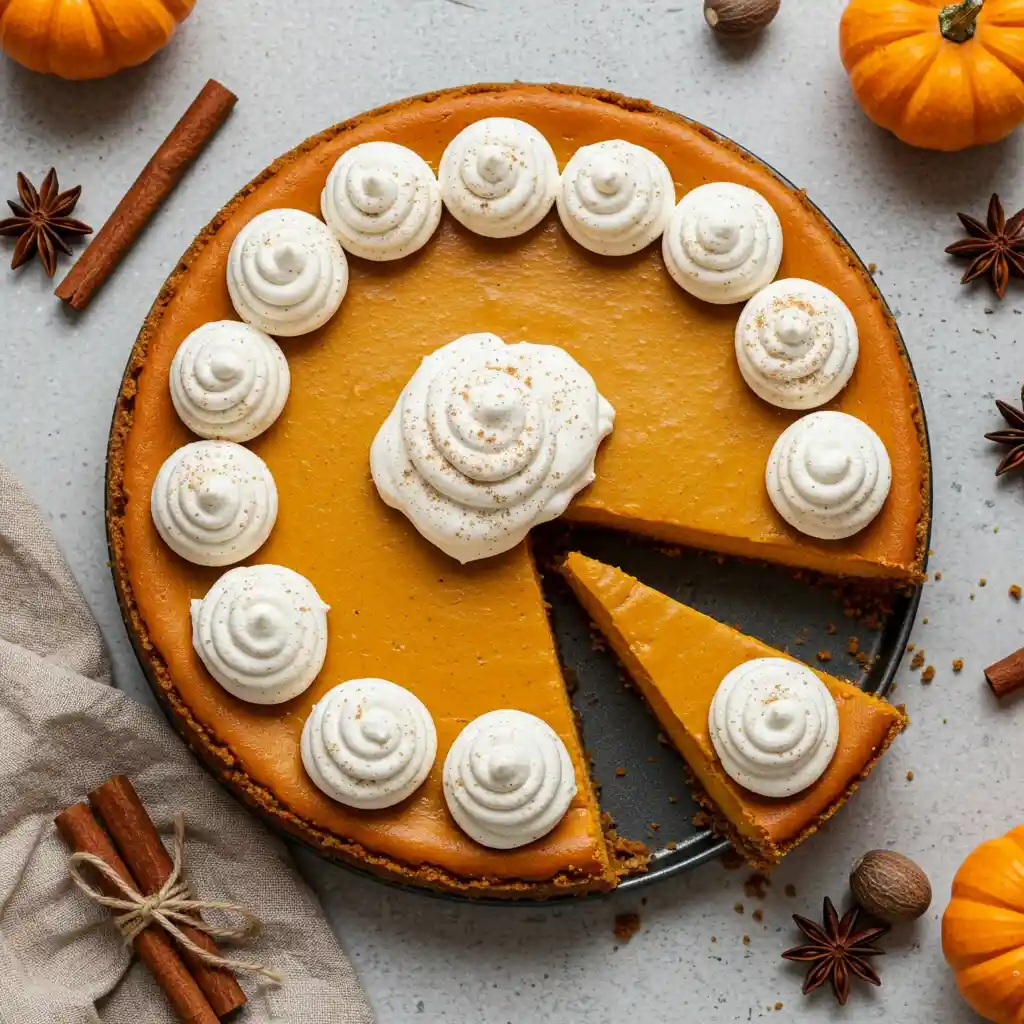
Before serving, release and remove the sides of the springform pan. If desired, top with whipped cream and a sprinkle of pumpkin pie spice. pumpkin flavor, and gentle spice in every bite, with a smooth, custardy texture and crisp buttery crust.
Expert Tips for Success
- Don’t rush the cream cheese softening process. Truly room temperature cream cheese (at least 1 hour out of the refrigerator) is essential for a smooth, lump-free batter. Cold cream cheese will remain lumpy no matter how long you beat it.
- Beat the cream cheese alone first until completely smooth before adding any other ingredients. This initial step is crucial for eliminating lumps that become impossible to fix later.
- Mix on low speed after adding the eggs. High-speed mixing incorporates too much air, which expands during baking and contracts during cooling, causing cracks.
- If your cheesecake does crack, don’t panic! Spread a thin layer of sweetened sour cream topping (1 cup sour cream mixed with ¼ cup sugar and ½ teaspoon vanilla) over the entire surface and bake for an additional 5 minutes.
- Check your oven temperature with an oven thermometer. Most home ovens run either hot or cold, and even a 25°F difference can affect cheesecake texture significantly.
Flavor Variations
Maple Pumpkin Cheesecake
Replace the granulated sugar with pure maple syrup (reduce the amount to ½ cup/120ml) and add 1 teaspoon maple extract to the filling. Top with maple-infused whipped cream by beating 1 cup heavy cream with 2 tablespoons maple syrup until stiff peaks form.
Chocolate Swirl Pumpkin Cheesecake
Melt 6 ounces (170g) semi-sweet chocolate with 3 tablespoons heavy cream. After pouring the pumpkin filling into the crust, dollop the chocolate mixture on top and swirl with a knife for a beautiful marbled effect. The contrast between chocolate and pumpkin creates a stunning visual and flavor combination.
Gingersnap Crust Variation
Replace the graham crackers with 2 cups (240g) of gingersnap cookie crumbs for a spicier base that complements the pumpkin wonderfully. Reduce the sugar in the crust to 2 tablespoons since gingersnaps are already sweetened.
Storage & Freezing
Refrigerated, this pumpkin cheesecake stays fresh for up to 5 days when stored in an airtight container or covered tightly with plastic wrap.
For freezing, you have two options:
- Freeze the entire cheesecake (without toppings): Chill completely first, then remove the sides of the springform pan and place the cheesecake on its base on a cardboard round. Wrap tightly in plastic wrap, then aluminum foil. Freeze for up to 2 months.
- Freeze individual slices: Place slices on a baking sheet until frozen solid (about 2 hours), then wrap each piece individually and store in a freezer container. This makes it easy to thaw just what you need.
To thaw a frozen cheesecake, transfer it to the refrigerator 24 hours before serving. For individual slices, 5-6 hours in the refrigerator is usually sufficient. Always thaw cheesecake in the refrigerator, never at room temperature, for food safety and to preserve the texture.
FAQ
Why did my cheesecake crack?
The most common causes are overmixing the batter (especially after adding eggs), baking at too high a temperature, or cooling too quickly. Using the water bath method and allowing the cheesecake to cool in the oven with the door cracked significantly reduces cracking risk.
Can I make this without a springform pan?
While a springform pan is ideal, you can use a deep 9-inch pie plate or cake pan lined with parchment paper with long overhanging edges to serve as handles. The cheesecake won’t have traditional straight sides, but the flavor will be identical.
How do I know when my cheesecake is done?
The perfect cheesecake should still have a slight jiggle in the center when gently shaken – about a 3-inch diameter circle in the middle should wobble slightly. The edges should be set and may have pulled away from the sides slightly. If using a thermometer, the center should register 150°F (65°C).
Can I use fresh pumpkin instead of canned?
Yes, but it requires extra preparation. Roast your pumpkin until very soft, puree it, then strain it through cheesecloth overnight to remove excess moisture. Fresh pumpkin typically contains more water than canned, which can affect the cheesecake’s texture if not properly drained.
Is the water bath really necessary?
While you can make a pumpkin cheesecake without a water bath, it significantly increases your risk of cracks, uneven baking, and a drier texture. The water bath provides gentle, even heat that’s worth the extra effort for professional results..
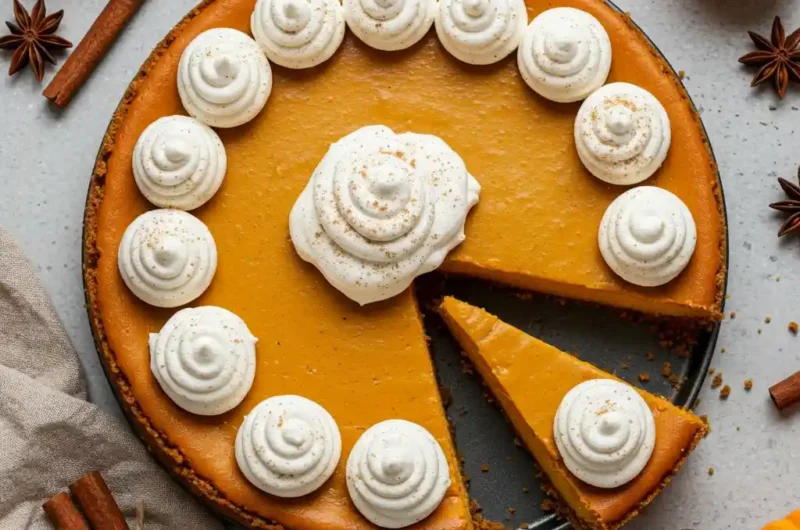
Pumpkin Cheesecake
Course: DessertCuisine: AmericanDifficulty: Intermediate12
slices30
minutes1
hour10
minutes460
kcal8
hoursSilky smooth pumpkin cheesecake with perfect spice balance and a buttery graham cracker crust. No-crack technique delivers bakery-quality results every time.
Ingredients
- For the Graham Cracker Crust:
1 1/2 cups (180g) – Graham cracker crumbs (about 12 full sheet graham crackers)
1/4 cup (50g) – Granulated sugar
6 tbsp (85g) – Unsalted butter (melted)
- For the Pumpkin Cheesecake Filling:
3 packages (24 oz/680g) – Full-fat cream cheese (room temperature)
1 cup (213g) – Light brown sugar (packed)
1/3 cup (67g) – Granulated sugar
15 oz (425g) – Pumpkin puree (strained)
1/4 cup (60g) – Sour cream (room temperature)
1/4 cup (60ml) – Heavy cream (room temperature)
1 tbsp (15ml) – Vanilla extract
1 1/2 tbsp (12g) – Pumpkin pie spice
3 large – Eggs (room temperature)
- For Optional Topping:
1 cup (240ml) – Heavy cream
2 tbsp (25g) – Granulated sugar
1/2 tsp (2.5ml) – Vanilla extract
1/4 tsp (1g) – Pumpkin pie spice (for garnish)
Directions
- Preheat oven to 350°F (175°C). Position rack in lower third of oven.
- Mix graham cracker crumbs, sugar, and melted butter until resembling wet sand.
- Press mixture firmly into bottom and 1-inch up sides of 9-inch springform pan. Use measuring cup to compact.
- Bake crust 8-10 minutes until lightly golden. Cool while preparing filling. Reduce oven to 325°F (165°C).
- Strain pumpkin puree in mesh sieve lined with cheesecloth for 30 minutes, pressing occasionally.
- Beat cream cheese on medium-low speed until completely smooth, about 2 minutes. Scrape bowl thoroughly.
- Add both sugars, beat on low speed until incorporated, about 1 minute.
- Mix in drained pumpkin, sour cream, heavy cream, vanilla, and pumpkin pie spice until just combined.
- Add eggs one at a time on low speed, mixing just until each is incorporated.
- Pour filling into cooled crust.
- Wrap outside of springform pan with 2-3 layers of heavy-duty foil, ensuring no seams where water could enter.
- Place wrapped cheesecake in large roasting pan. Fill pan with hot water halfway up sides of springform.
- Bake 60-70 minutes until edges are set but center still jiggles slightly when pan is shaken.
- Turn off oven, crack door open an inch, leave cheesecake inside to cool gradually for 1 hour.
- Remove from water bath, unwrap foil, run knife around edge to loosen.
- Cool completely on wire rack, about 2 hours.
- Cover and refrigerate at least 6 hours, preferably overnight.
- For topping: Whip heavy cream with sugar and vanilla until stiff peaks form.
- Remove sides of springform pan, top cheesecake with whipped cream and sprinkle with pumpkin pie spice before serving.
Notes
- Use full-fat block cream cheese, not the spreadable kind from a tub, for the best texture.
Bring cream cheese, sour cream, and eggs to room temperature before mixing to avoid lumps and overmixing.
Do not overmix once you add the eggs; this helps prevent cracks and keeps the texture creamy.
The center should still wobble slightly when you turn off the oven; it will finish setting as it cools.
For a fun twist, replace the graham cracker crumbs with gingersnap cookie crumbs and omit the added cinnamon.