No-Bake Peanut Butter Oatmeal Cookies (Firm & Chewy)
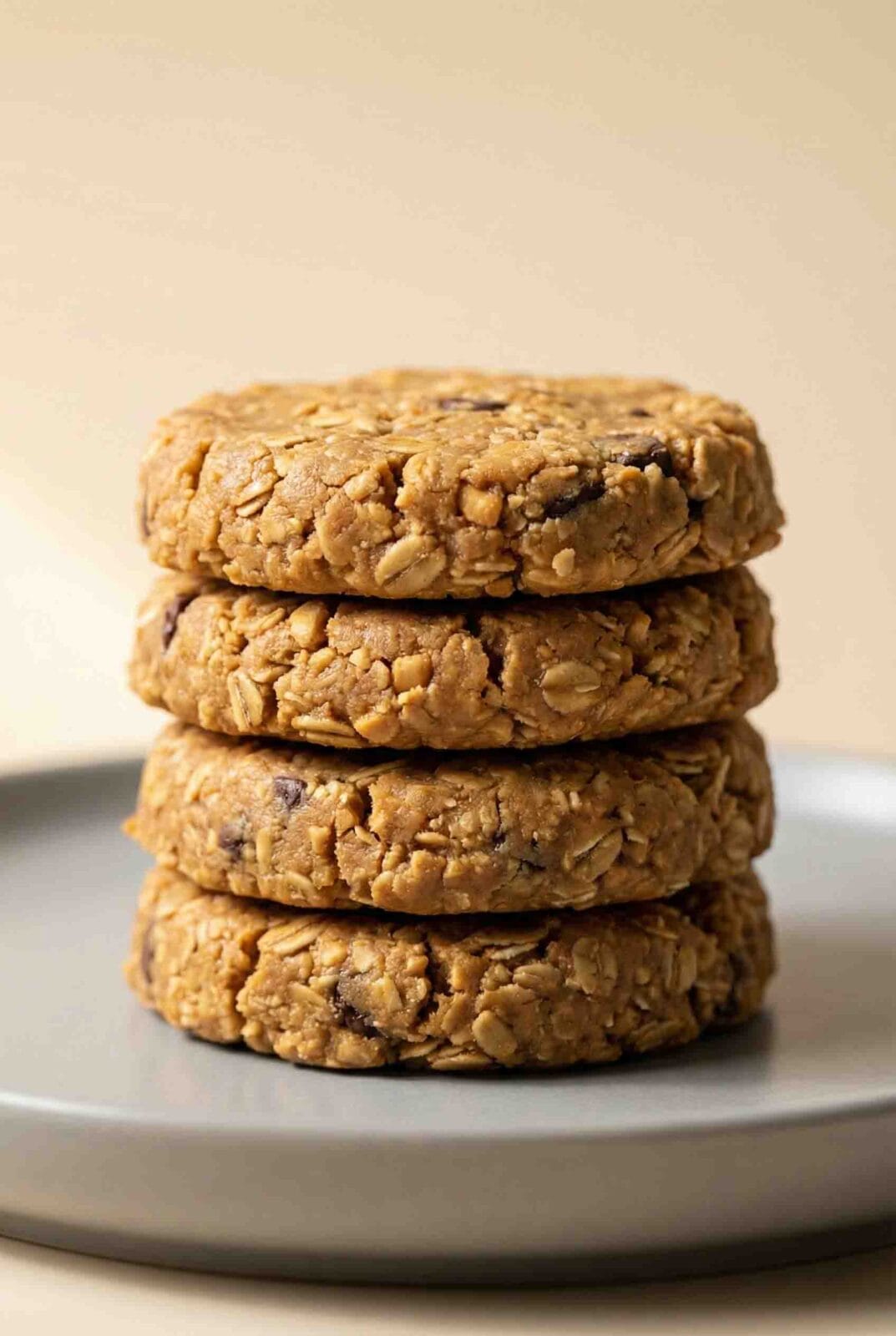
A classic stovetop no-bake cookie needs one thing above all: a syrup that hits the perfect stage. When the sugar mixture boils just long enough, it cools into a firm, chewy bite that holds together without crumbling and never turns soft or fudgy. These no-bake peanut butter oatmeal cookies lock into that texture—clean edges, cohesive centers, and a sturdy chew that sets right on the counter.
Quick Summary
Firm and chewy no-bake peanut butter oatmeal cookies built on stovetop syrup technique. Quick oats absorb the syrup evenly, while peanut butter stabilizes the set. No refrigeration required when the syrup stage is correct.
Why This Recipe Works
This firm-and-chewy style depends on moisture control. Boiling the sugar, butter, and milk mixture long enough evaporates water so the cookies tighten as they cool. Peanut butter melts into that hot syrup, strengthening the structure and giving the finished cookie its signature chew.
Quick oats absorb the syrup evenly, preventing loose edges or crumbly centers.
And shaping the cookies while the mixture is still warm ensures they set with a smooth, cohesive form.
Ingredients & Substitutions
Granulated Sugar: Provides the backbone of the syrup. Reducing it weakens the set; increasing it tips the texture toward brittle.
Butter: Blends into the syrup, giving the chew gloss and preventing grainy crystallization.
Milk: Hydrates the syrup. Too much delays setting; too little leads to a dry finish.
Creamy Peanut Butter: Stabilizes the structure as the syrup cools. Commercial creamy peanut butter creates the most reliable chew. Natural peanut butter may separate and produce soft or oily cookies.
Vanilla: Strictly flavor—does not impact texture or set.
Quick Oats: Absorb syrup rapidly and evenly. Old-fashioned oats remain firmer and require faster shaping; they can make cookies wider and slightly more rugged in chew.
Essential Equipment
- Heavy-bottom saucepan for stable, even boiling
- Wooden spoon or heat-safe spatula for folding oats
- Instant-read thermometer (optional but helpful)
- Parchment or wax paper for clean setting
- Cookie scoop for shaping before the mixture firms
How to Make No-Bake Peanut Butter Oatmeal Cookies
Bring Sugar, Butter, and Milk to a Controlled Boil
- Combine sugar, butter, and milk in a saucepan and heat until fully boiling.
- Maintain a steady boil for a short window—this is where moisture evaporates and chew develops later.
Stir in Peanut Butter for the Chewy Base
- Remove from heat and stir in peanut butter until smooth.
- The peanut butter thickens the syrup and helps stabilize the final set.
Fold in the Oats for Structure
- Add oats immediately.
- Fold until every piece is coated.
- Even coating ensures an even chew throughout.
Scoop Quickly Before the Mixture Firms
- The syrup begins to set as it cools.
- Work promptly to portion the cookies into neat mounds before the mixture loses mobility.
Cool Until Cookies Set with a Chewy Center
- Let the cookies rest at room temperature.
- As they cool, the syrup crystallizes lightly, giving each cookie its clean, firm bite.
Pro Tip
Watch the bubbles: when they grow larger and rise steadily, the syrup is just below soft-ball stage—the ideal point for firm, chewy cookies.
Expert Tips
- Reading the Boil: A vigorous rolling boil with large, steady bubbles signals proper moisture evaporation.
- Oat Absorption: Add oats immediately after stirring in peanut butter. Delayed mixing prevents full absorption and weakens the structure.
- Peanut Butter Type: Stabilized creamy peanut butter gives the cleanest set. Natural peanut butter can cause soft or greasy results.
- Humidity Adjustments: On humid days, boil a few seconds longer to reach the same syrup concentration.
- Preventing Graininess: Stir only enough to combine after peanut butter melts. Excess stirring encourages crystallization.
Storage & Freezing
To Store:
Store airtight for 4–5 days. Texture stays firm and chewy.
To Freeze Baked:
Freeze once fully cooled. Keeps 2 months. Thaw at room temperature to restore chew.
FAQ
- Why didn’t my cookies firm up?
The syrup didn’t boil long enough, or natural peanut butter reduced structure. Extend the boil slightly next time. - Why are my cookies crumbly?
The syrup over-boiled or too many oats were added. - Can I use old-fashioned oats?
Yes, but the chew becomes heartier and the mixture firms faster. Reduce oats slightly for easier shaping. - Why do my cookies stay sticky?
Humidity slowed evaporation or the syrup never reached the correct stage. - Can I reduce the sugar?
Not in this style. The sugar forms the structure that creates the firm, chewy set.
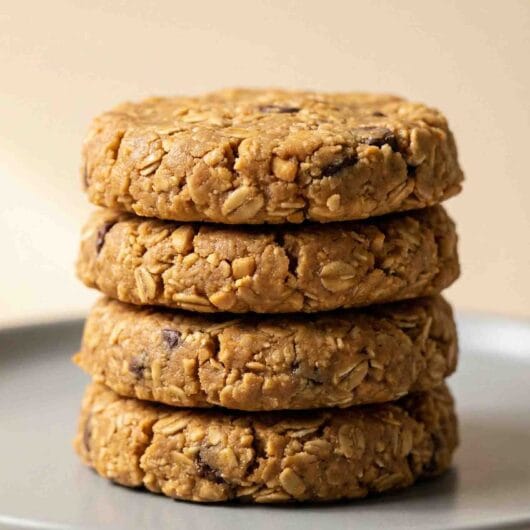
No-Bake Peanut Butter Oatmeal Cookies (Firm & Chewy)
Course: DessertsCuisine: AmericanDifficulty: Easy24
cookies5
minutes5
minutes160
kcal40
minutesClassic firm-and-chewy no-bake peanut butter oatmeal cookies made with the stovetop syrup method. Clean set, cohesive chew, and quick to prepare.
Ingredients
1 1/2 cups granulated sugar (300g)
1/2 cup unsalted butter (113g)
1/2 cup milk (120g)
3/4 cup creamy peanut butter (190g)
1 teaspoon vanilla extract (5g)
2 1/2 cups quick oats (225g)
Directions
- Line baking sheets with parchment or wax paper.
- Add sugar, butter, and milk to a saucepan. Bring to a rolling boil and cook 1 minute.
- Remove from heat. Stir in peanut butter and vanilla until smooth.
- Fold in oats until evenly coated.
- Scoop warm mixture into mounds on prepared sheets.
- Cool at room temperature until firm and chewy.
Notes
- Texture Marker:
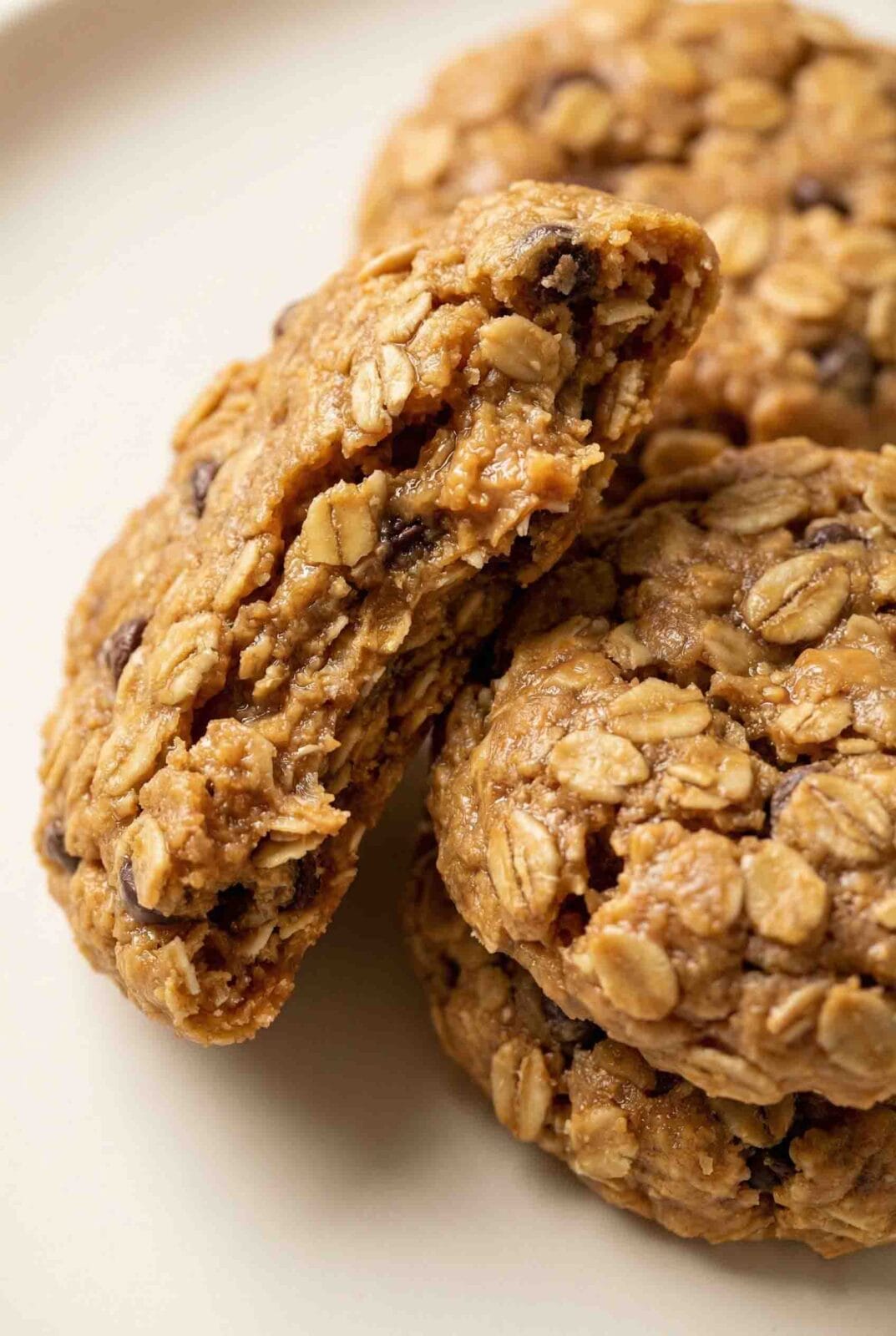
Cookies should lift cleanly with a firm exterior and cohesive chew—not soft, not brittle. - Storage:
Keep airtight 4–5 days. Freeze up to 2 months. - INTERNATIONAL SUBSTITUTIONS
UK/AUS: Rolled oats may be used but reduce slightly for proper absorption.