Peanut Butter Banana Bread (Moist & Fudgy)
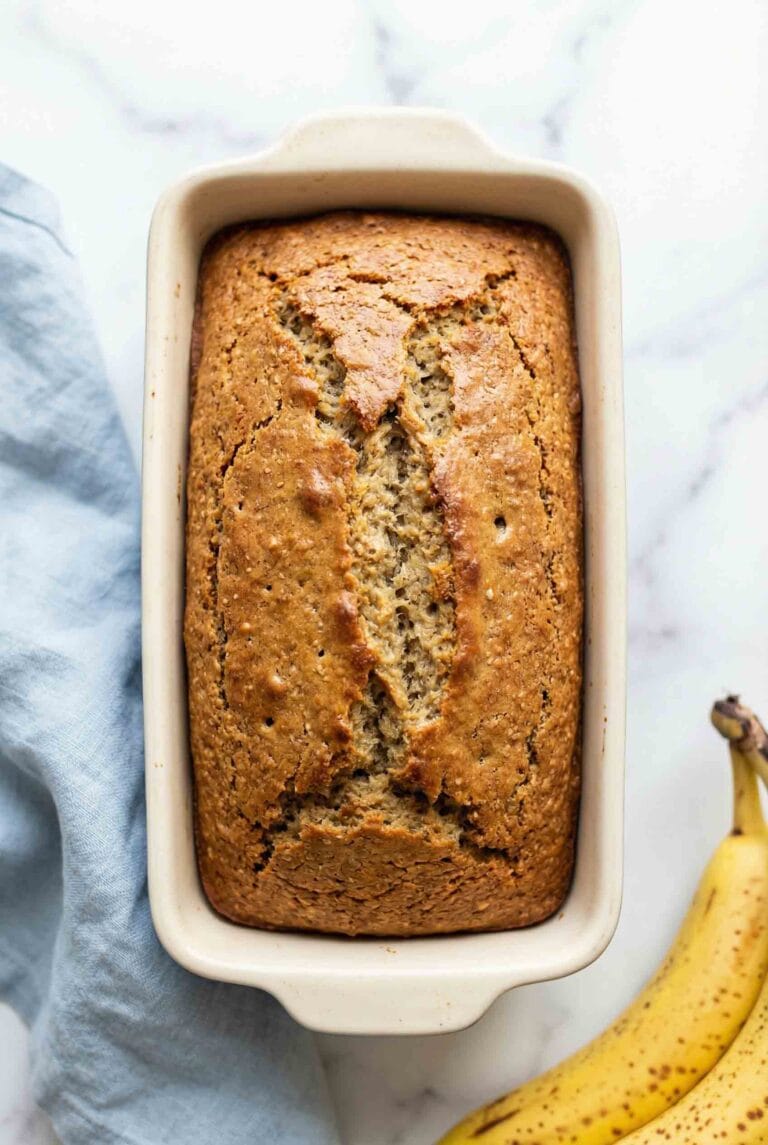
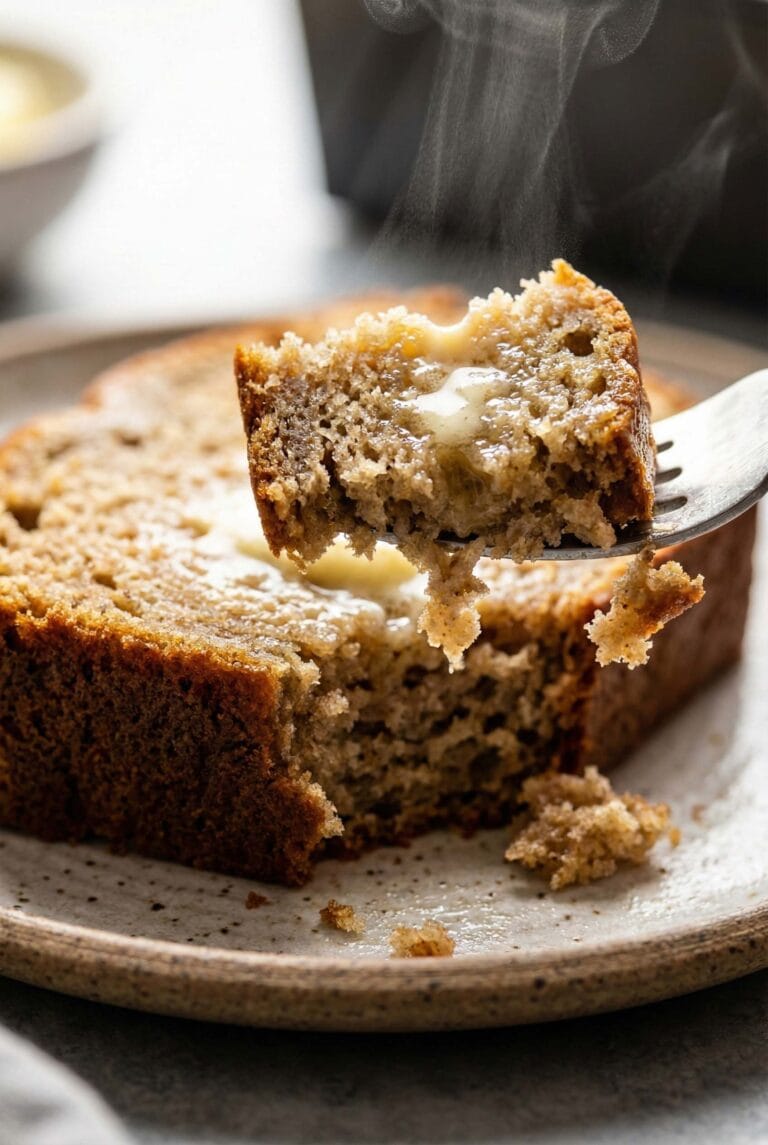
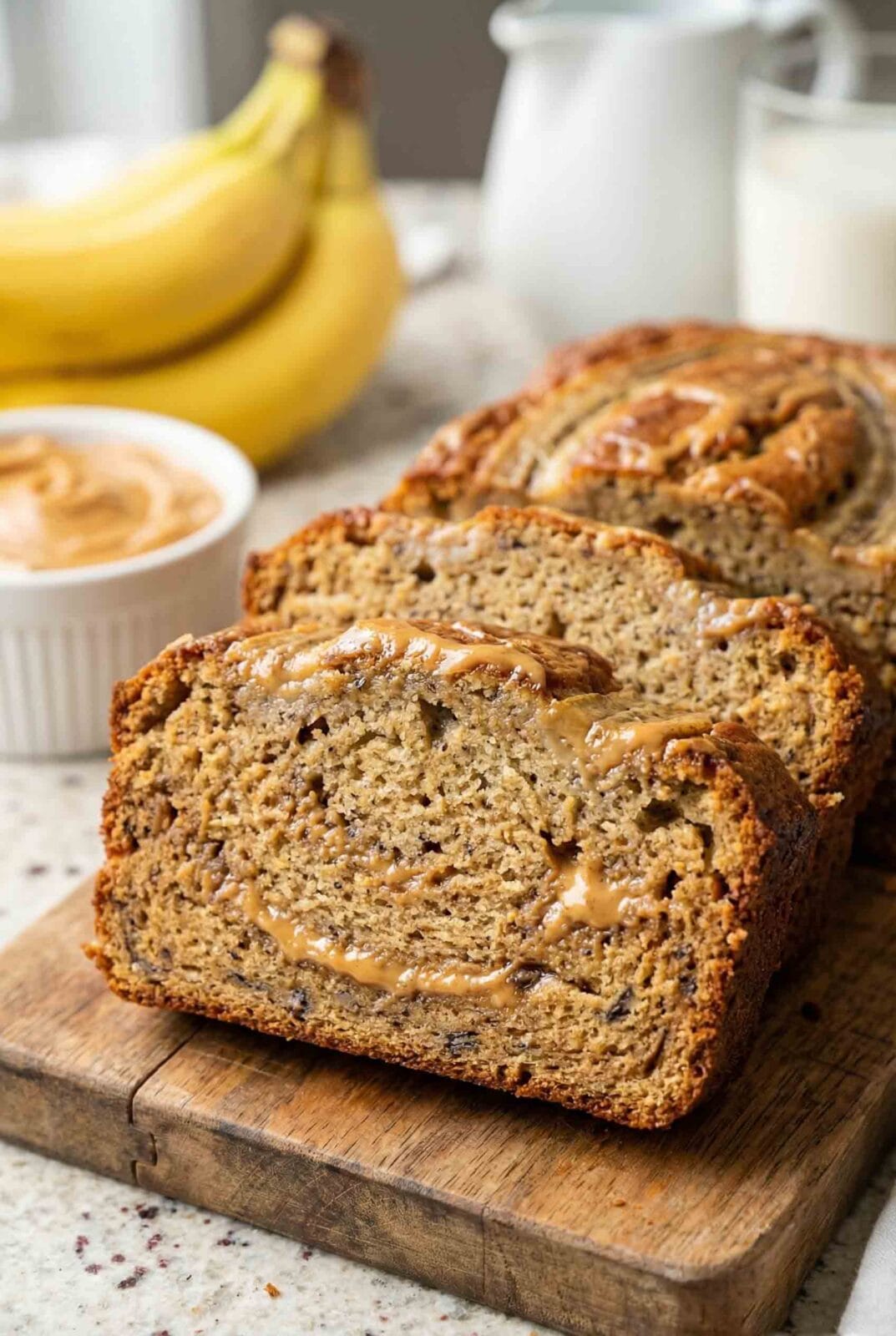
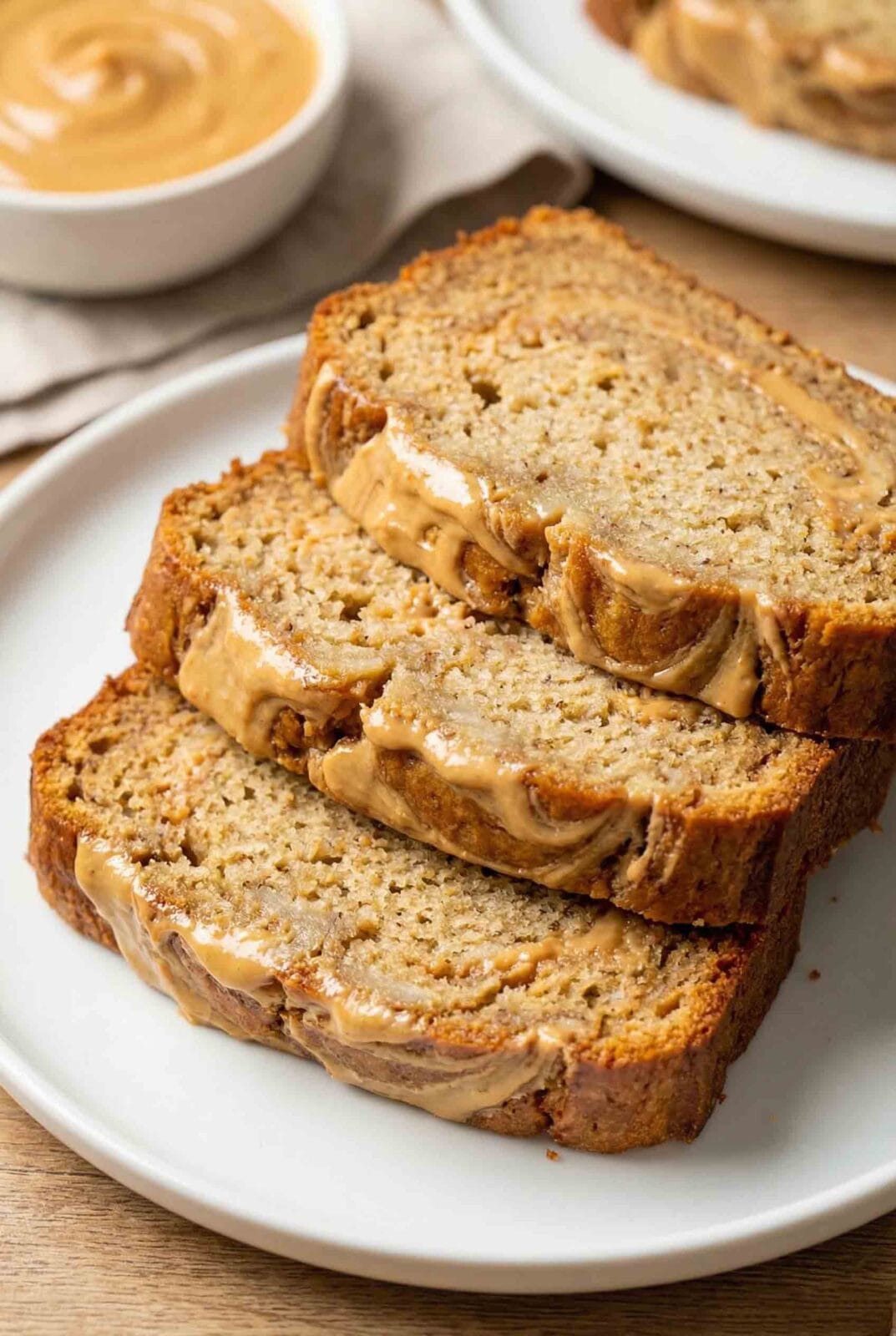
This isn’t your standard banana bread with a halfhearted swirl of peanut butter on top. This loaf is packed with creamy, nutty flavor in every bite—fudgy in the center, golden at the edges, and irresistibly tender. The peanut butter works into the batter itself, creating a velvety crumb that stays moist for days.
Quick Summary
Mash overripe bananas with peanut butter, oil, and sugar until smooth. Fold in the dry ingredients just until combined, then bake in a loaf pan at 350°F for 60-70 minutes. The peanut butter enriches the batter, giving you a denser, more luxurious texture than plain banana bread. A quick swirl on top adds visual appeal and an extra hit of nutty richness.
Peanut Butter Banana Bread (Moist & Fudgy)
Course: DessertsCuisine: AmericanDifficulty: Easy10
slices15
minutes1
hour5
minutes320
kcal1
hour20
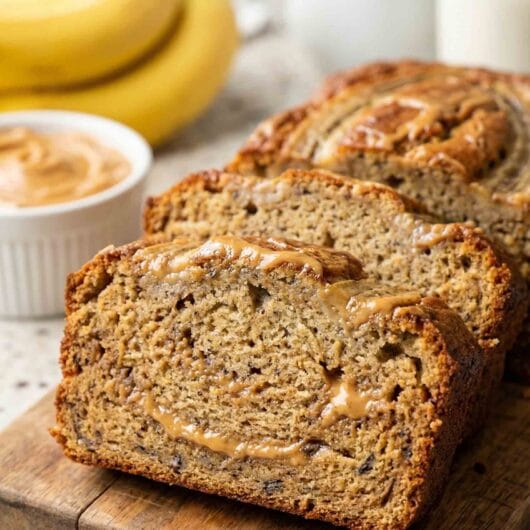
minutesFudgy, moist peanut butter banana bread with creamy peanut butter swirled throughout. This loaf stays tender for days and delivers bold, nutty flavor in every bite. Perfect for breakfast or an afternoon snack.
Ingredients
1 ½ cups Mashed Overripe Bananas (340g)
¾ cup Creamy Peanut Butter (190g) – for batter
2 tablespoons Creamy Peanut Butter (32g) – for swirl
½ cup Vegetable Oil (120ml)
½ cup Granulated Sugar (100g)
½ cup Light Brown Sugar, packed (110g)
2 Large Eggs, room temperature
2 teaspoons Pure Vanilla Extract (10ml)
1 ¾ cups All-Purpose Flour (220g)
1 teaspoon Baking Powder (5g)
½ teaspoon Baking Soda (3g)
¾ teaspoon Kosher Salt (4g)
Directions
- Preheat oven to 350°F. Grease a 9×5-inch loaf pan and line with parchment paper.
- In a large bowl, mash bananas until mostly smooth. Add peanut butter, oil, granulated sugar, and brown sugar. Whisk until creamy and fully combined.
- Add eggs one at a time, whisking after each addition. Stir in vanilla extract.
- In a separate bowl, whisk together flour, baking powder, baking soda, and salt.
- Pour dry ingredients into wet ingredients. Fold gently with a spatula until just combined. Do not overmix.
- Pour batter into prepared pan. Microwave remaining 2 tablespoons peanut butter for 10-15 seconds to loosen. Drizzle over batter and swirl with a skewer.
- Bake for 60-70 minutes, until a toothpick inserted in the center comes out with moist crumbs. Tent with foil after 55 minutes if browning too quickly.
- Cool in pan for 10 minutes. Lift out using parchment overhang and cool completely on a wire rack before slicing.
Notes
- For Best Texture: Use processed, no-stir peanut butter like Jif or Skippy. Natural peanut butter can make the loaf greasy or dense.
- Storage Tip: Wrap tightly in plastic wrap and store at room temperature for 3 days, refrigerate for 5 days, or freeze for up to 2 months.
- Dark Pan Adjustment: If using a dark-coated or glass pan, reduce oven temperature to 325°F.
- International Substitutions: For UK/Australian readers, use caster sugar instead of granulated sugar. Vegetable oil can be replaced with rapeseed oil.
Why This Recipe Works
Peanut butter replaces some fat and adds protein, making the bread denser and more satisfying than oil-only versions. Brown sugar deepens the caramel notes in overripe bananas, while granulated sugar balances sweetness. The combination creates a moist banana bread with complex flavor that improves over time.
Baking soda reacts with the natural acidity in bananas, creating a tender crumb without needing buttermilk or sour cream. The dual leavening approach—baking soda plus baking powder—ensures a sturdy rise that won’t collapse as the loaf cools. This balance is crucial for achieving that perfect fudgy texture without a sunken center.
Oil keeps the crumb ultra-moist for days, unlike butter, which can make quick breads dry out faster. The creamy peanut butter adds richness and acts as a natural preservative, so this loaf stays fresh at room temperature longer than traditional banana bread recipes.
Ingredients & Substitutions
- Overripe Bananas: The browner, the better. Black-spotted bananas are loaded with natural sugars and break down into a smooth puree that blends seamlessly into the batter. Underripe bananas will give you a starchy, bland loaf.
- Creamy Peanut Butter: This is the star. Use a processed, no-stir brand like Jif, Skippy, or Peter Pan. These varieties have stabilizers that prevent oil separation, which means consistent texture every time. Natural peanut butter (the kind where oil pools on top) can make the loaf greasy or dry depending on how well you stir it. If you insist on natural, stir it thoroughly and expect a slightly denser crumb.
- Granulated Sugar: Provides clean sweetness and helps with browning.
- Light Brown Sugar: Adds moisture and a hint of molasses flavor that plays beautifully with peanut butter.
- Vegetable Oil: Neutral oil is essential here. It keeps the crumb tender without competing with the peanut butter flavor. You can substitute with canola or avocado oil, but avoid olive oil (too assertive) or melted butter (makes the bread dry out faster).
- Large Eggs: Bind the batter and add structure. Cold eggs can cause the batter to seize up, so let them sit on the counter for 15 minutes before mixing.
- Pure Vanilla Extract: Amplifies the sweetness and rounds out the nutty flavor.
- All-Purpose Flour: The backbone of the loaf. Don’t substitute with whole wheat flour unless you’re prepared for a denser, grainier texture. If you want to sneak in some whole grains, replace up to ½ cup of the all-purpose flour with white whole wheat flour.
- Baking Powder: Works with baking soda to give the loaf a gentle lift.
- Baking Soda: Reacts with the natural acidity in bananas to tenderize the crumb.
- Kosher Salt: Balances sweetness and enhances the peanut butter flavor. Don’t skip this—it’s crucial.
Essential Equipment
- 9×5-Inch Light-Colored Loaf Pan: Dark or glass pans absorb heat too quickly, leading to burnt edges and a gummy center. A light-colored metal pan ensures even baking. If you only have a dark pan, reduce the oven temperature to 325°F and keep a close eye on the edges.
- Stand Mixer or Large Mixing Bowl: You can mix this by hand with a sturdy whisk, but a stand mixer makes quick work of blending the peanut butter into the bananas without lumps.
- Wire Cooling Rack: Essential for cooling the loaf evenly. If you leave it in the pan too long, the bottom gets soggy.
How To Make Peanut Butter Banana Bread
Preparing the Wet Ingredients
- Preheat your oven to 350°F. Grease a 9×5-inch loaf pan with nonstick spray or butter, then line the bottom with a strip of parchment paper that overhangs the long sides.
- In a large bowl, mash your bananas with a fork until mostly smooth. A few small lumps are fine—they’ll disappear during mixing.
- Add the peanut butter, vegetable oil, granulated sugar, and brown sugar. Use a whisk or the paddle attachment of your stand mixer to beat everything together until the mixture is creamy and no streaks of peanut butter remain. This takes about 1-2 minutes.
- Crack in the eggs one at a time, whisking after each addition. Pour in the vanilla extract and mix until the batter is glossy and smooth.
Mixing the Dry Ingredients
- In a separate medium bowl, whisk together the flour, baking powder, baking soda, and salt. Whisking aerates the flour and distributes the leavening agents evenly.
Combining and Swirling
- Pour the dry ingredients into the wet ingredients. Use a rubber spatula to fold everything together with a light hand. Stir just until the last streaks of flour disappear. The batter will be thick and slightly lumpy—this is what you want.
- Scrape the batter into your prepared loaf pan and smooth the top with the spatula.
- Take the remaining peanut butter (reserved for the top) and microwave it for 10-15 seconds if it’s too thick to drizzle. Drizzle it over the top of the batter in lines, then drag a skewer or chopstick through the lines to create a marbled pattern.
Baking to Perfection
- Slide the pan into the center of your preheated oven. Bake for 60-70 minutes, or until a toothpick inserted into the center comes out with just a few moist crumbs clinging to it.
- Check the loaf at the 55-minute mark. If the top is getting deeply golden but the center still jiggles, tent the loaf loosely with aluminum foil to prevent overbrowning.
- When the loaf is done, remove it from the oven and let it cool in the pan for 10 minutes. Use the parchment overhang to lift it out onto a wire rack. Let it cool completely before slicing—at least 30 minutes.
Pro-Tip
If you don’t have a 9×5-inch loaf pan, you can bake this in two 8×4-inch pans. Start checking for doneness at 45 minutes. You can also skip the swirl entirely and fold in ½ cup of chopped peanut butter cups during the final stir for bursts of chocolate and PB throughout.
Expert Tips for the Best Peanut Butter Banana Bread
- Use processed peanut butter, not natural. Natural peanut butter has separated oil that can make the loaf greasy or, paradoxically, dry if the solids are too dense. Processed brands like Jif or Skippy have emulsifiers that keep the texture consistent.
- Let the loaf cool completely before slicing. The peanut butter flavor develops as the bread cools. Warm slices taste good, but room-temperature slices have a richer, nuttier depth. If you can wait until the next day, even better.
- Don’t overmix the batter. Once you add the flour, stir just until combined. Overworking the batter activates gluten, which makes the bread tough. A few lumps are fine.
- Check for doneness early. Ovens vary wildly. Start checking at 55 minutes. The loaf is done when a toothpick inserted into the center comes out with a few moist crumbs—not wet batter.
- Adjust for dark pans. If you’re using a dark-coated or glass loaf pan, reduce the oven temperature to 325°F. These pans conduct heat more aggressively and can burn the edges before the center is set.
- Add texture if desired. If you want crunch, fold in ½ cup of chopped roasted peanuts or a handful of peanut butter chips during the final stir. Just don’t add chocolate chips here—we’re keeping this recipe focused on pure peanut butter flavor.
- Use room temperature eggs. Cold eggs can cause the batter to seize or curdle when mixed with the peanut butter. Let them sit on the counter for 15-20 minutes before starting.
Storage & Freezing
To Store: Wrap the cooled loaf tightly in plastic wrap or aluminum foil. It will stay moist at room temperature for up to 3 days. The peanut butter acts as a natural preservative, so this loaf doesn’t dry out as quickly as plain banana bread.
To Refrigerate: For longer storage, wrap the loaf and refrigerate for up to 5 days. The cold firms up the peanut butter slightly, giving each slice a denser, fudgier texture. Let slices come to room temperature for 10 minutes before eating, or warm them in the microwave for 15 seconds.
To Freeze (Whole Loaf): Wrap the completely cooled loaf in plastic wrap, then wrap it again in heavy-duty aluminum foil. Freeze for up to 2 months. Thaw overnight in the refrigerator or on the counter for 2-3 hours.
To Freeze (Individual Slices): Slice the loaf, then wrap each slice individually in plastic wrap. Store the wrapped slices in a freezer-safe zip-top bag. Freeze for up to 1 month. Thaw individual slices at room temperature for 30 minutes, or microwave for 30-45 seconds straight from frozen.
FAQ
- Can I use natural peanut butter in banana bread?
You can, but it’s not ideal. Natural peanut butter separates, and the oil layer can make the loaf greasy while the solids make it dense. If you use natural PB, stir it very well before measuring and expect a slightly different texture. Processed peanut butter (Jif, Skippy) gives the most consistent, foolproof results. - Why is my peanut butter banana bread dry?
Three common culprits: overbaking, overmixing the batter, or using underripe bananas. Check your loaf 5 minutes before the recommended bake time. Stir the batter just until the flour disappears. And make sure your bananas are heavily spotted or even black for maximum moisture. - How do you keep peanut butter banana bread moist?
Use oil instead of butter—it stays liquid at room temperature, keeping the crumb tender. Don’t overbake. And store the loaf tightly wrapped at room temperature. The peanut butter itself adds fat and moisture, so this bread stays softer longer than plain banana bread. - Can I add chocolate chips to peanut butter banana bread?
Absolutely, but it changes the flavor profile. If you add chocolate chips, the chocolate will dominate and the peanut butter becomes a supporting note. For this recipe, we’re keeping the focus on pure peanut butter flavor. If you want a chocolate-forward version, consider making a separate “Peanut Butter Chocolate Chip Banana Bread” with adjusted ratios. - How ripe should bananas be for banana bread?
Very ripe—heavily spotted or even black. The darker the peel, the sweeter and more flavorful the banana. Underripe bananas have starch that hasn’t converted to sugar yet, which makes the bread bland and starchy. - Can I freeze peanut butter banana bread?
Yes. Wrap the cooled loaf tightly in plastic wrap, then foil, and freeze for up to 2 months. You can also freeze individual slices wrapped in plastic and stored in a freezer bag. Thaw at room temperature or microwave straight from frozen.